
Huile essentielle d'Ylang Ylang Complète : comment l'utiliser correctement ?
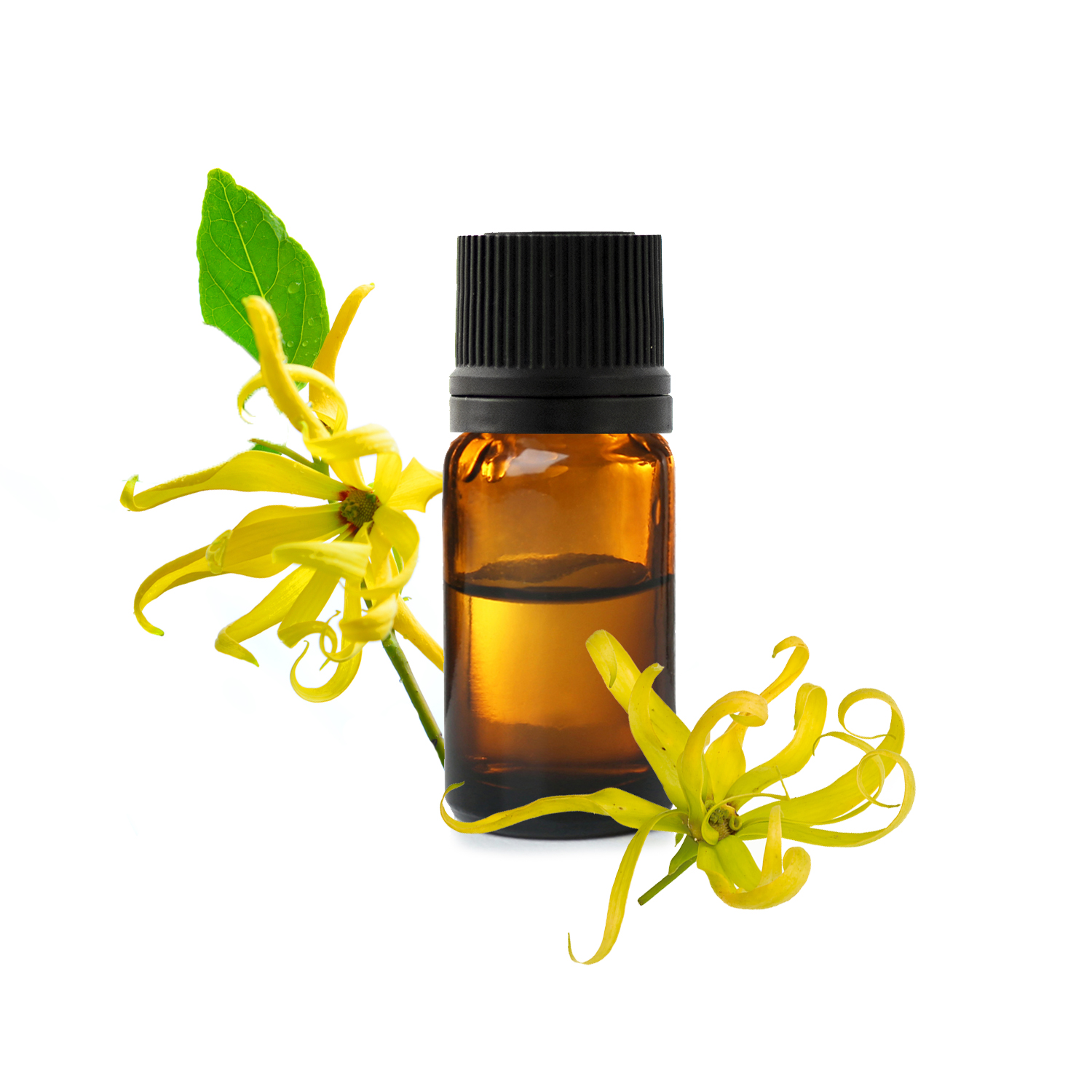
En bref
Précautions d'utilisation
L'huile essentielle d'Ylang Ylang Complète est relativement flexible d'utilisation. Elle est en effet utilisable par tout le monde exceptés les femmes enceintes de moins de 3 mois ainsi que les nourrissons de moins de 3 mois. L'huile essentielle d'Ylang Ylang Complète doit toutefois être utilisée avec attention, notamment en application cutanée, pour laquelle il est préconisé une dilution dans une huile végétale. De même, en diffusion, il est préférable de diluer l'huile essentielle d'Ylang Ylang Complète dans d'autres huiles essentielles.
Utilisateurs autorisés
- Adultes et Ados
- Enfants de moins de 6 ans
- Femmes enceintes & allaitantes
- Femmes enceintes de moins de 3 mois
- Bébés de moins de 3 mois
Voies d'utilisation possibles
- En inhalation
- Voie cutanée
- Voie orale
- En diffusion
Risques d'utilisation
- Allergisante
- Irritante pour la peau
Autres précautions
Avis médical
Demander un avis médical avant utilisation pour les personnes asthmatiques.
Application cutanée
L'huile essentielle d'Ylang Ylang Complète est sensibilisante pour la peau, il faut donc la diluer à 20 % dans une huile végétale avant toute application cutanée. Si l'odeur est jugée trop forte, diluer l'huile essentielle d'Ylang Ylang à 10 %.
En ingestion
L'utilisation de l'Ylang Ylang par voie orale dans un cadre thérapeutique est très rare et peu documentée. Cette huile essentielle peut toutefois s'utiliser en cuisine mais à très faible dose en raison de son goût très prononcé, et diluée au préalable dans une matière grasse (huile, crème, yaourt, lait) ou sucrée (sirop, miel).
En diffusion
Ne pas diffuser pure : diluer à 10-15 % dans d'autres huiles essentielles.
Contre-indications
Peut provoquer des céphalées, voire des nausées si la dose est trop élevée.
Composants allergènes
L’huile essentielle d'Ylang Ylang Complète contient des composants biochimiques allergènes :
- linalol (2 à 16 %)
- benzoate de benzyle (≤ 12 %)
- géraniol (≤ 5 %)
- farnésol (≤ 5 %)
- salicylate de benzyle (≤ 4 %)
- eugénol (≤ 0,9 %)
- alcool benzylique (≤ 0,5 %)
- isoeugénol (≤ 0,3 %)
Note : Il est préférable de tester l’huile essentielle avant de l’utiliser (deux gouttes au creux du coude pendant au moins 24 heures afin de vérifier qu’il n’y a pas de réaction).
Propriétés principales
L'huile essentielle d'Ylang Ylang Complète est fortement concentrée en sesquiterpènes et en alcools, ainsi qu'en acétate de géranyle. Ces différentes molécules lui confèrent les propriétés principales suivantes :
-
calmant, sédatif, relaxant ++++ (esters) :
l'huile essentielle d'Ylang Ylang agit sur la sécrétion de sérotonine et de dopamine, hormones déclenchant un effet de bien-être. Cela serait dû à sa teneur en benzoate de benzyle. L'acétate de géranyle, un autre ester présent dans l'Ylang Ylang, a un effet harmonisant sur le système nerveux autonome, responsable de l'expression de certains symptômes du stress (accélération du rythme cardiaque, sudation...). De plus, une étude menée en 2018 sur des souris en état de stress a prouvé que l’Ylang Ylang diminue le niveau de cortisol (hormone du stress) dans le sang.
-
spasmolytique, antalgique +++ (linalol,esters) :
grâce à ses propriétés calmantes, relaxantes et anxiolytiques, l'huile essentielle d'Ylang Ylang favorise la décontraction des muscles. Elle aurait également un effet décontractant direct sur les muscles via la voie de l'AMPc (adénosine monophosphate cyclique). L'Ylang Ylang est également antalgique : d'après une étude de Borgonetti et al. (2022), sa puissance en cas de douleurs nerveuses aigües et chroniques est comparable à celle de la morphine, substance antidouleurs utilisée dans les hôpitaux.
-
aphrodisiaque +++ (linalol,esters) :
l'huile essentielle d'Ylang Ylang Complète est traditionnellement utilisée pour favoriser le lâcher-prise et calmer l'anxiété, ce qui est bénéfique lors de moments intimes. Grâce à son odeur sensuelle et sa teneur en linalol et en esters (dont le benzoate de benzyle et l'acétate de géranyle), l'Ylang Ylang est calmante, anxiolytique et décontractante.
-
hypotenseur, régulateur cardiaque +++ (esters) :
des études ont pu démontrer que l’Ylang Ylang en inhalation et par voie cutanée diminue significativement la pression artérielle ainsi que le rythme cardiaque chez des sujets en situation de stress, grâce à ses propriétés calmantes et anxiolytiques. En effet, les poussées de stress peuvent entraîner des palpitations et une accélération du rythme cardiaque, ce qui augmente la tension artérielle.
-
tonique capillaire, régulateur de sébum ++ (alcools monoterpéniques) :
grâce à sa teneur en alcools monoterpéniques, l'huile essentielle d'Ylang Ylang Complète permet d’agir en tant que régulateur de la production de sébum, c’est-à-dire qu'elle fait en sorte qu’il ne soit produit ni trop peu ni pas assez de sébum au niveau de l’épiderme, du cuir chevelu et des cheveux.
Mais aussi ces propriétés secondaires :
- anti-inflammatoire
- antiparasitaire
- anti-oxydant
- anti-infectieux
- tonique cutané
Principales utilisations
En cas de Cheveux ternes, Chute de cheveux
Efficacité
En cas de Cheveux ternes, Chute de cheveux
Utilisation simple
Dès 6 ans. Par cutanée, diluer 3 gouttes dans 5 mL d'huile végétale au choix selon le type de cheveu (Jojoba ou Noisette pour les cheveux gras, Ricin ou Moutarde contre la chute des cheveux, Argan ou Coco pour les cheveux secs…). En cas d'odeur trop forte, diminuer le nombre de gouttes d'Ylang Ylang.
Utilisation en synergie
Réservée aux + de 6 ans. Quelques gouttes du mélange suivant en massage du cuir chevelu une heure avant le shampoing.
- 5 gouttes d'huile essentielle d'Ylang Ylang Complète
- 5 gouttes d'huile essentielle de Genévrier
- 10 gouttes d'huile essentielle de Romarin à cinéole
- 2 cuillères à café d'huile végétale de Macadamia
Source : Zahalka, J. P. (2015). Dictionnaire complet d'aromathérapie. Editions du Dauphin.
En cas de Palpitations, Tachycardie, Hypertension
Efficacité
En cas de Palpitations, Tachycardie, Hypertension
Utilisation simple
Réservé aux plus de 6 ans. Par voie cutanée, déposer 1 goutte d'Ylang Ylang sur l’intérieur des poignets, puis prendre de profondes inspirations, dès que le besoin se fait ressentir, en cas de stress. En massage sur le plexus et pour les peaux sensibles, diluer 1 goutte dans 4 gouttes d'huile végétale. Répéter jusqu'à 3 fois par jour en cas de besoin.
Demander un avis médical. Ne remplace pas un traitement de l’hypertension ou des troubles du rythme cardiaque.
Utilisation en synergie
Réservée aux adultes. A renouveler 2 fois par jour, avec une pause d'une semaine après 3 semaines d'utilisation. Ne remplace pas un traitement de l’hypertension ou des troubles du rythme cardiaque. Avec l'accord du médecin, et en cas de pic de stress, appliquer 5 gouttes de ce mélange en massage sur le plexus solaire et/ou l'intérieur des poignets :
- 30 gouttes d'huile essentielle de Marjolaine à Coquilles
- 10 gouttes d'huile essentielle d'Ylang Ylang Complète
- 10 gouttes d'huile essentielle d'Eucalyptus Citronné
- 30 gouttes d'huile essentielle de Lavande Vraie
- Finir de remplir le flacon de 10 mL avec de l'huile végétale d'Argan
Plus de détails : les huiles essentielles contre l'hypertension.
Contre la Perte de libido, Fatigue sexuelle
Efficacité
Contre la Perte de libido, Fatigue sexuelle
Utilisation simple
Pour adultes seulement. Par voie cutanée, diluer 1 goutte d'Ylang Ylang dans 4 gouttes d'huile végétale, en massage sur le bas de la colonne vertébrale, 2 fois par jour pendant 10 jours. Pour un massage sur une plus grande surface, ne pas hésiter à diluer l’huile essentielle dans une plus grande quantité d’huile végétale.
Utilisation en synergie
Pour les hommes. A renouveler pendant 1 semaine. Déposez 4 gouttes du mélange sur le bas du dos matin et soir.
- 15 gouttes d’huile essentielle de Gingembre
- 15 gouttes d’huile essentielle d'Ylang Ylang Complète
- 15 gouttes d’huile essentielle de Verveine Odorante
- 15 gouttes d’huile essentielle de Cannelle
- 160 gouttes d’huile végétale de Noisette
Plus de détails : les huiles essentielles contre la perte de libido masculine.
Pour les femmes. A renouveler pendant 1 semaine. Déposez 5 gouttes dans le bas du dos, 2 fois par jour.
- 20 gouttes d’huile essentielle d’Ylang Ylang Complète
- 10 gouttes d’huile essentielle de Néroli
- 10 gouttes d’huile essentielle de Géranium Rosat
- 160 gouttes d’huile végétale de Noisette
Plus de détails : les huiles essentielles contre la perte de libido féminine.
En cas d' Angoisse, Anxiété, Stress
Efficacité
En cas d' Angoisse, Anxiété, Stress
Utilisation simple
Réservé aux + de 6 ans. Par voie cutanée, 1 goutte d'huile essentielle d'Ylang Ylang dans 4 gouttes d'huile végétale, en massage sur le plexus solaire et la face interne des poignets. En inhalation, respirer directement au-dessus du flacon.
À partir de 3 ans, et pour les femmes enceintes de plus de 3 mois. Même utilisation que ci-dessus, mais en diluant l'huile essentielle d'Ylang Ylang Complète à 10% dans une huile végétale (1 dose d'huile essentielle pour 9 doses d'huile végétale).
À partir de 3 mois. Même utilisation que ci-dessus, mais en diluant l'huile essentielle d'Ylang Ylang Complète à 5% dans une huile végétale (1 dose d'huile essentielle pour 20 doses d'huile végétale).
Utilisation en synergie
Réservée aux + de 6 ans. Par voie cutanée, appliquez 1 goutte du mélange sur le plexus solaire et 1 goutte sur la face interne de chaque poignet. Renouvelez l'opération 2 à 3 fois par jour selon les besoins. En cas d'utilisation prolongée ou pour les peaux sensibles, diluer dans une huile végétale :
- 90 gouttes d'huile essentielle de Petit Grain Bigarade
- 30 gouttes d'huile essentielle d'Ylang Ylang Complète
- 30 gouttes d'huile essentielle de Lemongrass
Plus de détails et autres utilisateurs : les huiles essentielles contre le stress.
Ylang Ylang Complète ou Petit Grain Bigarade ?
L'huile essentielle d'Ylang Ylang Complète sera très efficace grâce à sa propriété calmante, mais l'huile essentielle de Petit Grain Bigarade est la référence dans ce domaine. En inhalation : 1 goutte pure sur les poignets à inhaler profondément, 3 fois par jour, jusqu’à amélioration. Faire une pause d'une semaine après trois semaines d'utilisation. En diffusion : verser le nombre de gouttes indiqué sur la notice. Diffuser par plage de 30 minutes maximum.
Contre les Troubles du sommeil, Insomnie
Efficacité
Contre les Troubles du sommeil, Insomnie
Utilisation simple
Réservé aux + de 6 ans. Par voie cutanée, 1 goutte d'huile essentielle d'Ylang Ylang dans 4 gouttes d'huile végétale, en massage sur le plexus solaire et la face interne des poignets.
À partir de 3 ans, et pour les femmes enceintes de plus de 3 mois. Même utilisation que ci-dessus, mais en diluant l'huile essentielle d'Ylang Ylang Complète à 10% dans une huile végétale (1 dose d'huile essentielle pour 9 doses d'huile végétale).
À partir de 3 mois. Même utilisation que ci-dessus, mais en diluant l'huile essentielle d'Ylang Ylang Complète à 5% dans une huile végétale (1 dose d'huile essentielle pour 20 doses d'huile végétale).
Utilisation en synergie
À partir de 3 ans. Appliquer 2 à 3 gouttes du mélange sur la face interne des poignets et le plexus solaire au moment du coucher, et respirer :
- 4 gouttes d’huile essentielle d’Ylang Ylang,
- 13 gouttes d’huile essentielle de Ravintsara,
- 13 gouttes d’huile essentielle d’Orange Douce,
- Compléter jusqu'à 10 mL d’huile végétale.
Source : CHEVALLIER C., DUPUY LAFON V. (2022). Emotions Stress Sommeil. Editions Grancher
Ylang Ylang Complète ou Camomille Romaine ?
L'huile essentielle d'Ylang Ylang peut être efficace contre les insomnies, mais l'huile essentielle de Camomille Romaine est plus efficace encore. Elle peut être utilisée dès l'âge de 3 mois en diffusion par exemple, 10 minutes avant l’heure du coucher ou par voie cutanée, 1 goutte diluée dans 9 gouttes d’huile végétale, en massage sur le plexus solaire et/ou la plante des pieds.
En cas de Choc émotionnel
Efficacité
En cas de Choc émotionnel
Utilisation simple
Réservé aux + de 6 ans. Par voie cutanée, diluer 1 goutte d'huile essentielle d'Ylang Ylang dans 4 gouttes d'huile végétale, en massage sur le plexus solaire et la face interne des poignets.
À partir de 3 ans, et pour les femmes enceintes de plus de 3 mois. Même utilisation que ci-dessus, mais en diluant l'huile essentielle d'Ylang Ylang Complète à 10% dans une huile végétale (1 dose d'huile essentielle pour 9 doses d'huile végétale).
Ylang Ylang Complète ou Camomille Romaine ?
L'huile essentielle d'Ylang Ylang est efficace en cas de choc émotionnel, mais l'huile essentielle de Camomille Romaine l'est encore plus. À partir de 3 ans, par voie cutanée : 1 goutte diluée dans 9 gouttes d’huile végétale, en massage sur le plexus solaire et/ou la plante des pieds.
Contre les Douleur d'origine nerveuse
Efficacité
Contre les Douleur d'origine nerveuse
Utilisation simple
Réservé aux + de 6 ans. Par voie cutanée, 1 goutte d'huile essentielle d'Ylang Ylang dans 4 gouttes d'huile végétale, en massage sur le plexus solaire, la face interne des poignets ou la zone douloureuse
À partir de 3 ans, et pour les femmes enceintes de plus de 3 mois : même utilisation que ci-dessus, mais en diluant l'huile essentielle d'Ylang Ylang Complète à 10% dans une huile végétale (1 dose d'huile essentielle pour 9 doses d'huile végétale).
À partir de 3 mois. Même utilisation que ci-dessus, mais en diluant l'huile essentielle d'Ylang Ylang Complète à 5% dans une huile végétale (1 dose d'huile essentielle pour 20 doses d'huile végétale).
Ylang Ylang Complète ou Camomille Romaine ?
L'huile essentielle d'Ylang Ylang est efficace en cas de douleurs nerveuses, mais l'huile essentielle de Camomille Romaine l'est encore plus. Elle peut être utilisée dès l'âge de 3 mois par voie cutanée : 1 goutte diluée dans 9 gouttes d’huile végétale, en massage sur le plexus solaire et/ou la zone douloureuse.
Autres applications réputées de l' Ylang Ylang Complète
L'huile essentielle d'Ylang Ylang Complète est utilisée en de très nombreuses occasions, notamment liées à sa propriété de tonique générale. Pour la plupart des utilisations suivantes elle sera efficace, mais sans être forcément la meilleure huile essentielle. Nous vous indiquons donc le meilleur remplaçant de l'Ylang Ylang Complète pour les différents problèmes suivants.
Asthénie, Fatigue
Ylang Ylang Complète n'est pas efficace pour ce type de fatigue, il vaut mieux employer l'huile essentielle d'Epinette Noire en cas de fatigue physique : 1 goutte dans 4 gouttes d'huile végétale en application dans le bas du dos au niveau des reins, 3 fois par jour. Faire une pause d'une semaine au bout de trois semaines d'utilisation.
Vergetures
Ylang Ylang Complète efficace mais… Il vaut mieux employer l'huile essentielle de Géranium Rosat contre les vergetures : par voie cutanée, 1 goutte dans 4 gouttes d'huile végétale sur les zones affectées, 2 fois par jour, jusqu’à amélioration.
Comment reconnaître une bonne huile essentielle d'Ylang Ylang Complète ?
Caractéristiques botaniques
- Nom Latin : Cananga odorata (Lam.) Hook.f. & Thomson forma genuina
- Famille botanique : Annonacées
- Partie utilisée : fleurs
- Pays d'origine : Comores,Madagascar.
Caractéristiques physiques
- Densité à 20°C : 0.920 à 0.950
- Indice de réfraction à 20°C : 1.495 à 1.513
- Pouvoir rotatoire à 20°C : -50 à -30
- Point éclair : 78
Caractéristiques organoleptiques
- Aspect : liquide
- Couleur : jaune pâle à jaune foncé
- Odeur : fleurie,caractéristique.
Caractéristiques biochimiques
- germacrène D : 13 à 24 %
- β-caryophyllène : 5 à 17 %
- trans trans α farnesène : 2 à 16 %
- linalol : 2 à 16 %
- éther de p-crésyl méthyle : 0.1 à 16 %
- acétate de benzyle : ≤ 14 %
- benzoate de benzyle : 3.5 à 12 %
- acétate de géranyle : 1 à 12 %
- benzoate de méthyle : 0.1 à 9 %
- acétate de farnésyle : 0.5 à 5 %
- salicylate de benzyle : 1.2 à 4 %
- farnésol : 0.1 à 4 %
- géraniol : 0.2 à 3 %
Ylang Ylang Complète, I, II ou III ?
Il existe différentes qualités d'huile essentielle d'Ylang Ylang, correspondant aux différentes fractions de la distillation des fleurs. Elles vont toutes présenter des propriétés physico-chimiques différentes. On va retrouver :
- l'Ylang Ylang Extra : c'est la plus odorante, elle est très prisée des parfumeurs... Mais c'est également la plus chère !
- l'Ylang Ylang Première (I) : issue de la première fraction de distillation
- l'Ylang Ylang Deuxième (II) : issue de la deuxième fraction de distillation
- l'Ylang Ylang Troisième (III) : issue de la troisième fraction de distillation
- l'Ylang Ylang Complète ou Totum : issue de la distillation complète, qui dure en moyenne 18h. Elle contient l'intégralité des molécules aromatiques de la plante, ce qui la rend plus intéressante pour un usage thérapeutique.
Cet article vous a-t-il été utile ?
Note moyenne 4.7/5 (1263 votes)
Bibliographie
Publications scientifiques
- Burdock, G. A., & Carabin, I. G. (2008). Safety assessment of Ylang–Ylang (Cananga spp.) as a food ingredient. Food and Chemical Toxicology, 46(2), 433–445. https://doi.org/10.1016/j.fct.2007.09.105
- Cha, J., Lee, S., & Yoo, Y. (2010). Effects of Aromatherapy on Changes in the Autonomic Nervous System, Aortic Pulse Wave Velocity and Aortic Augmentation Index in Patients with Essential Hypertension. Journal of Korean Academy of Nursing, 40(5), 705. https://doi.org/10.4040/jkan.2010.40.5.705
- De Groot, A. C., & Schmidt, E. (2017). Essential Oils, Part VI. Dermatitis, 28(1), 14–21.
- Holt, S. (1999). Natural Approaches to Promote Sexual Function : Part 2: Stimulants and Dietary Supplements. Alternative and Complementary Therapies, 5(5), 279–285. https://doi.org/10.1089/act.1999.5.279
- Hongratanaworakit, T., & Buchbauer, G. (2004). Evaluation of the Harmonizing Effect of Ylang-Ylang Oil on Humans after Inhalation. Planta Medica, 70(7), 632–636. https://doi.org/10.1055/s-2004-827186
- Hongratanaworakit, T., & Buchbauer, G. (2006). Relaxing effect of ylang ylang oil on humans after transdermal absorption. Phytotherapy Research, 20(9), 758–763. https://doi.org/10.1002/ptr.1950
- Tan, L. T. H., Lee, L. H., Yin, W. F., Chan, C. K., Abdul Kadir, H., Chan, K. G., & Goh, B. H. (2015). Traditional Uses, Phytochemistry, and Bioactivities ofCananga odorata(Ylang-Ylang). Evidence-Based Complementary and Alternative Medicine, 2015, 1–30. https://doi.org/10.1155/2015/896314
- Zhang, N., Zhang, L., Feng, L., & Yao, L. (2016). The anxiolytic effect of essential oil of Cananga odorata exposure on mice and determination of its major active constituents. Phytomedicine, 23(14), 1727–1734. https://doi.org/10.1016/j.phymed.2016.10.017
- Ghédira, K., & Goetz, P. (2018). Ylang-ylang. Phytothérapie, 16(1), 59–63. https://doi.org/10.3166/phyto-2018-0005
- Zhang, N., Zhang, L., Feng, L., & Yao, L. (2018). Cananga odorata essential oil reverses the anxiety induced by 1-(3-chlorophenyl) piperazine through regulating the MAPK pathway and serotonin system in mice. Journal of ethnopharmacology, 219, 23-30.
- Borgonetti, V., López, V., & Galeotti, N. (2022). Ylang-ylang (Cananga odorata (Lam.) Hook. f. & ; Thomson) essential oil reduced neuropathic-pain and associated anxiety symptoms in mice. Journal of Ethnopharmacology, 294, 115362. https://doi.org/10.1016/j.jep.2022.115362
Ouvrages
- Baudoux, D. (2017). Aromathérapie. Dunod.
- de la Charie, T. (2019). Se soigner par les huiles essentielles. Pourquoi et comment ça marche ? Editions du Rocher.
- Zahalka, J. (2017). Dictionnaire complet d'aromathérapie. Editions du Dauphin.
Commandez GRATUITEMENT votre Guide des 200 recettes d'aromatherapie
« Parfait petit livret sur l'utilisation des huiles essentielles. Tres bien confectionne. »
Nathalie
